Workforce systems are often described as pipelines, programs, or platforms.
Rarely are they described as human experiences.
Yet every workforce system — every job board, application portal, training pathway, hiring process, or employer pipeline — is ultimately experienced by a person.
A person navigating complexity.
A person carrying history.
A person balancing responsibilities.
A person with strengths, constraints, and lived realities.
At Arivaii, accessibility, variability, and human-centered design are not add-ons to our work.
They are the foundation.
Accessibility Is Not a Feature. It Is a Starting Point.
Accessibility is often treated as compliance.
A checklist.
A requirement.
A retrofitted adjustment.
But true accessibility is structural.
If a system assumes:
-
Everyone has high-speed internet
-
Everyone has uninterrupted time
-
Everyone processes information the same way
-
Everyone can navigate complexity without support
Then it is not accessible — even if it meets technical standards.
Accessibility begins by asking:
Who might be excluded by this design?
And more importantly:
What would this look like if we designed for them first?
When accessibility is foundational, systems become clearer, more efficient, and more resilient for everyone.
Human Variability Is the Reality of Work
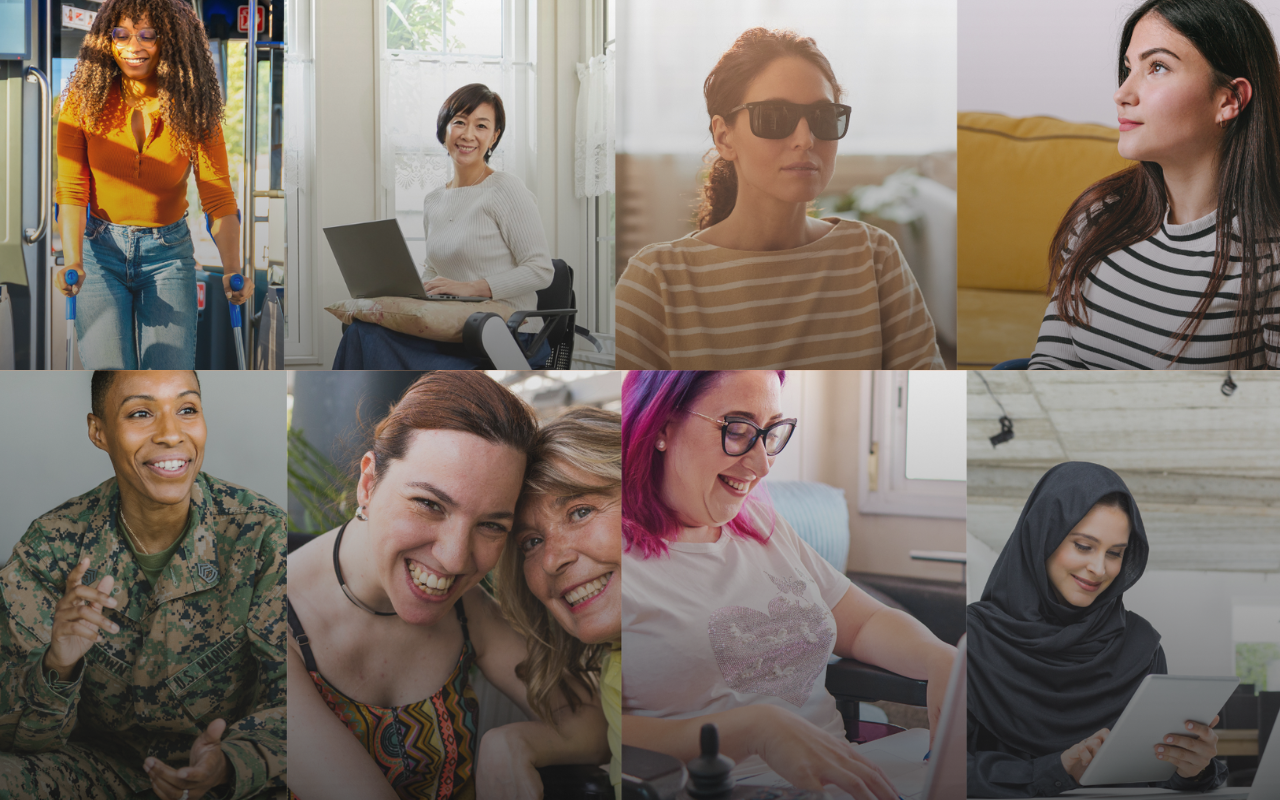
No two people move through work the same way.
Some are entering for the first time.
Some are re-entering after caregiving or health interruptions.
Some are navigating disability.
Some are balancing multiple jobs.
Some are transitioning industries.
Some are veterans.
Some are recent graduates.
Some are seasoned professionals seeking stability.
Workforce systems often assume a linear journey.
But real lives are nonlinear.
At Arivaii, we design with variability in mind:
-
Cognitive variability
-
Physical variability
-
Economic variability
-
Cultural variability
-
Geographic variability
-
Career-stage variability
When systems are built to accommodate variability, they stop penalizing people for being human.
Human-Centered Design Is About Dignity
Human-centered design is not aesthetic.
It is ethical.
It asks:
Does this system preserve dignity?
Does it reduce unnecessary friction?
Does it communicate clearly?
Does it respect time and effort?
Does it empower rather than overwhelm?
Too often, workforce systems are designed around institutional convenience instead of human experience.
Forms are long.
Navigation is unclear.
Requirements are opaque.
Support is reactive instead of proactive.
When dignity is not considered, trust erodes.
Human-centered design restores it.
This Is Personal — and Structural
For Arivaii’s founder, Amanda Burke, this mission is informed by both professional leadership and lived experience.
As a biracial woman and a proud member of the disability community, she has navigated systems that were not always built with accessibility as a starting point.
Her career across enterprise workforce strategy and inclusive hiring revealed a pattern:
When systems are built intentionally around access and variability, performance improves.
Employer engagement improves.
Retention improves.
Participation improves.
Outcomes improve.
Accessibility is not at odds with performance.
It strengthens it.
Why This Matters Now
The labor market is shifting.
Technology is accelerating.
Demographic change is reshaping talent pools.
Institutions are under pressure to demonstrate measurable impact.
Workforce systems that ignore variability will struggle.
Workforce systems that prioritize accessibility and clarity will thrive.
Human-centered design is not idealism.
It is infrastructure strategy.
What We Believe
At Arivaii, we believe:
Opportunity should not depend on navigating complexity alone.
Systems should adapt to people — not the other way around.
Accessibility strengthens scalability.
Variability is not an exception — it is the norm.
Designing for dignity creates measurable impact.
We do not approach accessibility as charity.
We approach it as structural intelligence.
The Future of Work Must Be Designed Intentionally
Workforce systems shape economic mobility.
They shape who participates.
They shape who advances.
They shape who is overlooked.
If those systems are designed without accessibility and variability in mind, inequity becomes embedded.
If they are designed intentionally, opportunity expands.
That is why accessibility, variability, and human-centered design matter to us.
Not as language.
Not as branding.
But as architecture.
Because the future of work should not just function.
It should work — for real humans.